
iowa wrestling lifting program pdf
Iowa Wrestling Lifting Program: A Comprehensive Overview (as of 12/12/2025)
Currently, publicly accessible information regarding a detailed Iowa Wrestling lifting program PDF is limited, reflecting the program’s competitive advantage.
However, insights
from recent athlete additions – Endene, Peterson, Williams, Calkins Jr., Torres, and Ciatto –
suggest a focus on functional strength and individualized plans, potentially documented internally for coaching staff use.
Historical Context of Iowa Wrestling Success
Iowa’s wrestling dominance isn’t solely attributable to technique; a consistent, evolving strength and conditioning program has been foundational for decades. While a readily available, comprehensive Iowa Wrestling lifting program PDF remains elusive to the public, the program’s historical success points to a long-standing commitment to physical preparation.
Historically, the Hawkeyes have prioritized building wrestlers capable of imposing their will, physically and mentally. This approach, solidified under Dan Gable and continued by Tom Brands, necessitates a robust lifting regimen. The recent influx of talent – transfers like Massoma Endene, Dean Peterson, and Jordan Williams, alongside promising freshmen such as David Calkins Jr. – underscores the program’s need to integrate diverse strength backgrounds.
The program’s ability to consistently produce national champions and Olympic medalists (like Kennedy Blades) suggests a sophisticated understanding of periodization, functional strength, and individualized training. Though the specifics aren’t widely published, the results speak volumes about the effectiveness of their methods. The emergence of Iowa Women’s Wrestling further necessitates adaptable strength protocols.
Tom Brands’ Coaching Philosophy & Strength Training
Tom Brands’ coaching philosophy centers on relentless effort, mental toughness, and physical dominance – all intrinsically linked to a meticulously planned strength training program. While a detailed Iowa Wrestling lifting program PDF isn’t publicly accessible, observations and athlete testimonials reveal a program designed to build “wrestling strength,” not simply bulk.
Brands emphasizes functional movements that directly translate to mat performance. The integration of transfer athletes like Massoma Endene, Dean Peterson, and Jordan Williams requires adapting the program to their existing strength bases, showcasing its flexibility. The development of freshman talent (Calkins Jr., Torres, Ciatto) necessitates a foundational strength phase.
His approach isn’t about chasing trends; it’s about building wrestlers who can dictate pace and impose their will. The program likely prioritizes core stability, posterior chain development, and explosive power. The success of the Iowa Women’s Wrestling program suggests adaptable strength protocols are employed, though specifics remain confidential.
The Importance of Strength & Conditioning in Wrestling
Strength and conditioning are paramount in wrestling, extending far beyond simply possessing raw power. The Iowa program recognizes this, building a system where physical preparation directly fuels competitive success. While a comprehensive Iowa Wrestling lifting program PDF remains unavailable publicly, the program’s consistent national championship contention underscores its effectiveness.

Wrestling demands a unique blend of strength, endurance, flexibility, and explosiveness. A well-designed program mitigates injury risk, enhances technique execution, and allows wrestlers to maintain intensity throughout matches. The recent success of the Iowa Women’s Wrestling team, aiming for a three-peat, highlights the importance of tailored conditioning.
The influx of talent – Endene, Peterson, Williams, Calkins Jr., Torres, and Ciatto – necessitates individualized plans. Strength training isn’t merely supplemental; it’s integral to achieving Tom Brands’ vision of dominant, relentless wrestlers.

Key Components of the Iowa Wrestling Lifting Program
Though a detailed PDF isn’t public, the program centers on functional strength, periodized lifting, and robust core stability, adapting to individual needs and weight classes.
Focus on Functional Strength
While a comprehensive Iowa Wrestling lifting program PDF remains unavailable publicly, observations from recent team developments – including transfers like Massoma Endene and incoming freshmen such as David Calkins Jr. – strongly indicate a core philosophy centered around functional strength. This isn’t simply about maximizing weight lifted, but rather developing strength directly applicable to wrestling movements.
Exercises are likely chosen to mimic the demands of being on the mat: explosiveness for takedowns, sustained strength for controlling opponents, and rotational power for escapes and pinning combinations. The program prioritizes movements that translate to wrestling-specific performance, rather than purely aesthetic muscle building. This approach is further reinforced by Tom Brands’ coaching philosophy, which emphasizes relentless effort and a gritty, competitive mindset – qualities best fostered through practical, functional strength gains.
The absence of a detailed PDF suggests the program is highly individualized, adapting to each wrestler’s specific needs and weight class, further emphasizing the practical application of strength training.
Periodization of Lifting Throughout the Season
Despite the lack of a publicly released Iowa Wrestling lifting program PDF, it’s highly probable the program employs a sophisticated periodization strategy. This means lifting protocols aren’t static, but rather evolve throughout the season to align with competition demands. Early in the off-season, the focus likely centers on building a base of general strength and muscle mass, utilizing higher volume and moderate intensity.
As the season approaches, the emphasis shifts towards power development and rate of force production, incorporating Olympic lifts and explosive movements. Closer to competitions, volume decreases while intensity increases, peaking for optimal performance. This cyclical approach minimizes fatigue and reduces the risk of injury, ensuring wrestlers are fresh and powerful when it matters most.
The integration of transfer athletes like Dean Peterson and Jordan Williams, alongside freshman talent, necessitates individualized periodization plans, further supporting the likelihood of a dynamic, evolving program.
Emphasis on Core Strength & Stability
While a comprehensive Iowa Wrestling lifting program PDF remains unavailable publicly, core strength and stability are undoubtedly central tenets. Wrestling demands exceptional control and power transfer, originating from a robust core. The program likely incorporates a variety of exercises beyond traditional crunches, focusing on anti-rotation, anti-extension, and anti-lateral flexion – resisting movements that disrupt spinal stability.
Exercises such as planks, Pallof presses, and rotational movements with resistance bands are probable staples. A strong core protects the spine, enhances power generation in takedowns and escapes, and improves overall body positioning. This emphasis is crucial for all weight classes, particularly considering the diverse roster including notable wrestlers like Kennedy Blades and the incoming freshman class.
The success of the Iowa women’s wrestling team, aiming for a three-peat, further underscores the importance of foundational strength, with core stability being paramount.

Specific Exercises Included in the Program
Though a detailed Iowa Wrestling lifting program PDF isn’t public, reports suggest squats, Olympic lifts (clean & jerk, snatch), bench press, and deadlifts form the foundation,
prioritizing technique.
Squats & Variations (Back Squats, Front Squats)
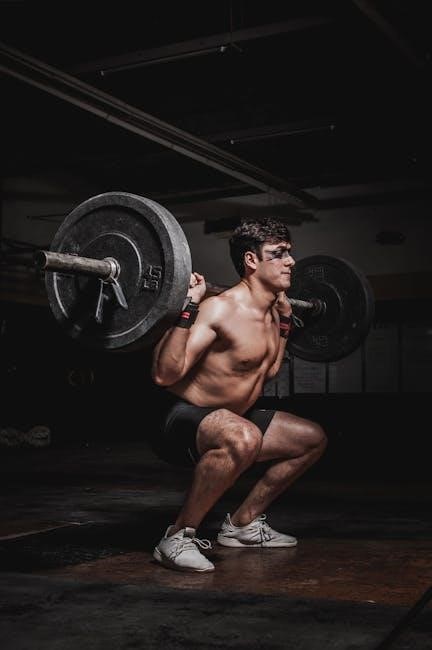
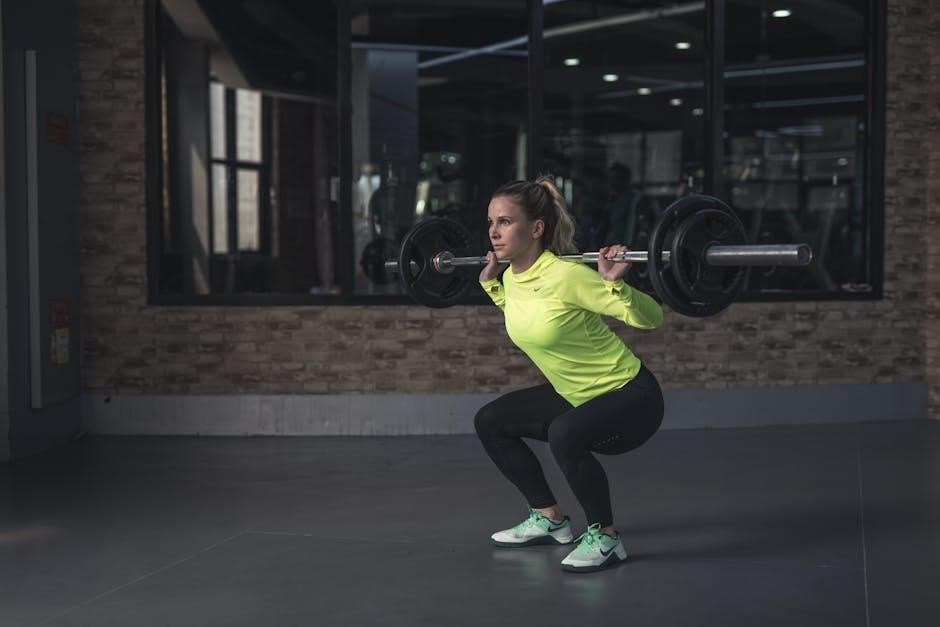
While a comprehensive Iowa Wrestling lifting program PDF remains unavailable publicly, the emphasis on functional strength strongly indicates squats – both back and front variations – are central to athlete development. Squats build lower body power crucial for wrestling, enhancing explosiveness for takedowns and maintaining positional control.
Considering the program’s focus on individualization, variations likely cater to different weight classes and athlete needs. Back squats likely form the base for overall strength, while front squats may be incorporated to improve core stability and upright posture – vital for wrestling stance.
The recent influx of talent, including transfers like Massoma Endene and freshmen like David Calkins Jr., suggests a tailored approach to squat programming, adjusting volume and intensity based on individual assessments. Expect a progressive overload strategy, building strength throughout the season.
Olympic Lifts (Clean & Jerk, Snatch) ⎻ Technique Focus

Despite the lack of a publicly released Iowa Wrestling lifting program PDF, Olympic lifts – the Clean & Jerk and Snatch – are almost certainly incorporated, albeit with a significant emphasis on technique over maximal weight. These lifts develop explosive power, rate of force development, and overall athleticism, directly translating to wrestling performance.
Given Tom Brands’ coaching philosophy, prioritizing proper form is paramount. The program likely dedicates substantial time to mastering the complex movements before increasing load. This minimizes injury risk and maximizes power transfer.
The integration of new athletes like Jordan Williams and the freshman class suggests individualized technique work. Adjustments will be made based on existing lifting backgrounds and skill levels. Expect variations and progressions to build proficiency safely and effectively.
Bench Press & Upper Body Strength
While a comprehensive Iowa Wrestling lifting program PDF remains unavailable publicly, bench press and broader upper body strength development are undoubtedly key components. Wrestling demands significant upper body power for controlling opponents, sprawling, and executing takedowns. The program likely utilizes variations beyond the standard bench press – incline, decline, and dumbbell presses – to target different muscle groups.
Considering the recent influx of talent like Massoma Endene, individualized plans are crucial. Upper body work will be tailored to address specific weaknesses and enhance existing strengths. Expect accessory exercises like rows, pull-ups, and shoulder presses to build a well-rounded foundation.
Technique and injury prevention are likely prioritized, mirroring Tom Brands’ overall philosophy. The program probably emphasizes controlled movements and proper form to maximize gains and minimize risk.
Deadlifts & Posterior Chain Development
Despite the lack of a publicly released Iowa Wrestling lifting program PDF, deadlifts and posterior chain development are almost certainly central to building wrestling-specific strength. A powerful posterior chain – encompassing the glutes, hamstrings, and lower back – is vital for explosive takedowns, resisting opponents’ pressure, and maintaining a strong wrestling stance.
The program likely incorporates various deadlift variations, including conventional, sumo, and Romanian deadlifts, to target different muscle fibers and address individual biomechanics. Accessory exercises such as good mornings, glute-ham raises, and back extensions would further strengthen this crucial muscle group.
With new additions like Endene, Peterson, and Williams, individualized attention to posterior chain strength is paramount. Proper technique and progressive overload are likely emphasized to maximize gains and prevent injuries.

Program Adaptations for Different Weight Classes
While a comprehensive Iowa Wrestling lifting program PDF isn’t public, adjustments for weight classes are implied. Volume and intensity are likely modified,
considering athlete size and individual needs for optimal performance.
Adjusting Volume & Intensity
Despite the lack of a publicly available Iowa Wrestling lifting program PDF, it’s reasonable to infer that volume and intensity adjustments are central to their training methodology. Considering the diverse weight classes within the program – and the recent influx of transfers like Massoma Endene, Dean Peterson, and Jordan Williams – a one-size-fits-all approach would be ineffective.
Heavier weight class athletes likely emphasize higher absolute loads with potentially lower repetitions, focusing on maximal strength development. Conversely, lighter weight wrestlers would likely prioritize explosive power and speed, utilizing moderate loads with higher repetitions; Intensity, measured by percentage of one-rep max, would be carefully periodized throughout the season, peaking before competitions.
The integration of freshman talent, such as David Calkins Jr. and Paolo Ciatto, further necessitates individualized adjustments. Their initial lifting programs would likely focus on building a foundational strength base before progressing to more advanced techniques. Monitoring athlete performance and feedback, as highlighted in recent program updates, would be crucial for refining these adjustments.
Individualized Lifting Plans
While a comprehensive Iowa Wrestling lifting program PDF remains unavailable publicly, the program’s success strongly suggests a commitment to individualized lifting plans. The recent additions of transfer athletes – Endene, Peterson, and Williams – each bring unique strength profiles and training histories requiring tailored approaches.
These plans likely consider factors beyond weight class, including an athlete’s experience level, injury history, and specific wrestling style. Incoming freshmen, like Calkins Jr. and Torres, would receive programs designed to build a foundational strength base, differing significantly from those of seasoned competitors.
Tom Brands’ coaching philosophy emphasizes maximizing individual potential. Therefore, individualized plans would incorporate regular assessments to monitor progress and adjust training parameters accordingly. This data-driven approach, combined with athlete feedback, ensures optimal strength and conditioning for each wrestler, contributing to the program’s consistent national championship contention.
Considerations for Female Wrestlers (Iowa Women’s Wrestling Program)
Despite the lack of a publicly available Iowa Wrestling lifting program PDF, the burgeoning women’s wrestling program necessitates tailored strength and conditioning protocols. Kennedy Blades’ recent praise for the Iowa program suggests a supportive environment, likely extending to individualized lifting plans.
These plans must account for physiological differences between male and female athletes, focusing on areas crucial for wrestling success – core stability, posterior chain strength, and explosive power. Volume and intensity will be adjusted to optimize performance and minimize injury risk.
Given the program’s ambition to “three-peat” as national champions, a dedicated lifting regimen is vital. This likely incorporates exercises mirroring those used by the men’s team, but with modifications to suit the specific needs of female wrestlers, ensuring equitable and effective training for all Hawkeyes.
Recent Program Updates & New Additions (2024-2026)
No updates to a publicly released Iowa Wrestling lifting program PDF have been announced, despite significant roster changes with athletes like Endene, Peterson, and Calkins Jr. joining the team.
Impact of Transfer Athletes (Massoma Endene, Dean Peterson, Jordan Williams)
The arrival of Massoma Endene, Dean Peterson, and Jordan Williams has prompted internal adjustments within the Iowa wrestling strength and conditioning program, though these haven’t resulted in a public PDF update. While specific lifting protocols remain confidential, their prior training backgrounds at Wartburg and other institutions necessitate integration into the Hawkeyes’ existing system.
It’s anticipated that individualized lifting plans are being developed for each transfer, considering their unique strengths and areas for improvement. University of Iowa wrestling rosters indicate potential weight class shifts for Peterson and Williams, further influencing their tailored strength programs. The coaching staff, led by Tom Brands, likely assesses each athlete’s response to the program, making data-driven decisions.
Currently, there’s no indication of a revised, publicly available Iowa Wrestling lifting program PDF reflecting these changes; the program maintains its competitive edge by keeping detailed protocols internal.
Integration of Freshman Talent (David Calkins Jr., CJ Torres, Paolo Ciatto)

The inclusion of highly-regarded freshmen David Calkins Jr., CJ Torres, and Paolo Ciatto necessitates a phased integration into the Iowa wrestling strength program, though details aren’t publicly available in a PDF format. Ciatto and Torres are currently slated to gray-shirt, suggesting a modified lifting schedule focused on foundational strength and injury prevention, rather than immediate competition demands.
Calkins Jr., as a committed prospect, will likely follow a more accelerated program, tailored to his existing strength base and projected weight class. The coaching staff, under Tom Brands, will prioritize proper technique and gradual increases in intensity to avoid overtraining. Individualized plans are crucial, considering varying levels of prior strength training experience.
As with transfer athletes, no updated Iowa Wrestling lifting program PDF has been released; the program continues to safeguard its competitive advantage by maintaining internal control over training protocols.
Adjustments Based on Athlete Performance & Feedback
The Iowa wrestling lifting program is demonstrably dynamic, adapting to athlete performance and feedback, though a comprehensive PDF detailing these changes remains unavailable publicly. Recent roster adjustments – including transfers like Massoma Endene, Dean Peterson, and Jordan Williams – necessitate individualized program modifications. Performance data collected during training and competition informs these adjustments, ensuring optimal strength gains and injury mitigation.
Feedback from athletes, particularly regarding exercise effectiveness and recovery, is integral to the process. Tom Brands’ coaching philosophy emphasizes continuous improvement, suggesting a willingness to refine the program based on practical experience. This iterative approach likely involves subtle shifts in volume, intensity, and exercise selection.
Despite these ongoing refinements, the core principles of functional strength and periodization remain consistent, and no updated Iowa Wrestling lifting program PDF has been released.
Accessing Iowa Wrestling Lifting Program Resources (PDF Availability)
A publicly available, detailed Iowa Wrestling lifting program PDF does not currently exist, maintaining a competitive edge. Information remains largely internal to the coaching staff and athletes.
Availability of Publicly Accessible Information
As of December 12th, 2025, a comprehensive and officially released Iowa Wrestling lifting program PDF is not readily available to the general public. This strategic decision likely aims to preserve a competitive advantage, as detailed strength and conditioning protocols are often closely guarded secrets within elite collegiate wrestling programs. While general principles of functional strength, periodization, and core stability are widely discussed in wrestling circles, the specific exercises, sets, reps, and progression schemes employed by the Hawkeyes remain largely undisclosed.
Information gleaned from recent news and athlete announcements – regarding transfers like Massoma Endene, Dean Peterson, and Jordan Williams, as well as incoming freshmen David Calkins Jr., CJ Torres, and Paolo Ciatto – hints at a highly individualized approach. However, these insights are anecdotal and do not constitute a complete program outline. Fans and aspiring wrestlers seeking detailed information will likely find limited success in their search for a downloadable PDF document.
The program’s emphasis on adapting to different weight classes and incorporating feedback further suggests a dynamic and evolving system, making a static PDF potentially obsolete quickly.
Potential for Program Evolution & Changes
Given the dynamic nature of collegiate athletics and the Iowa wrestling program’s commitment to continuous improvement, the lifting program is subject to ongoing evolution. The influx of transfer athletes – Endene, Peterson, and Williams – alongside promising freshmen like Calkins Jr., Torres, and Ciatto, necessitates constant adaptation and refinement of training protocols. Coach Tom Brands’ philosophy emphasizes performance-based adjustments, meaning the program isn’t static.
Even if a detailed Iowa Wrestling lifting program PDF were to become available at some point, it would likely represent a snapshot in time. Changes in athlete needs, emerging research in strength and conditioning, and competitive pressures will inevitably lead to modifications. The success of the Iowa women’s wrestling team, aiming for a three-peat, will also influence program-wide strategies.
Therefore, any publicly accessible information should be viewed as a guide rather than a definitive blueprint, acknowledging the program’s inherent flexibility and commitment to maximizing athlete potential.